The short answer
A 5% glycolic treatment you sweep on at night and leave on. Two nights a week, never on the same night as retinol, and moisturiser after rather than instead.
Used that way it is one of the few acids worth its price. Used nightly because the bottle is there, it is the fastest route to a stripped barrier on this whole site.
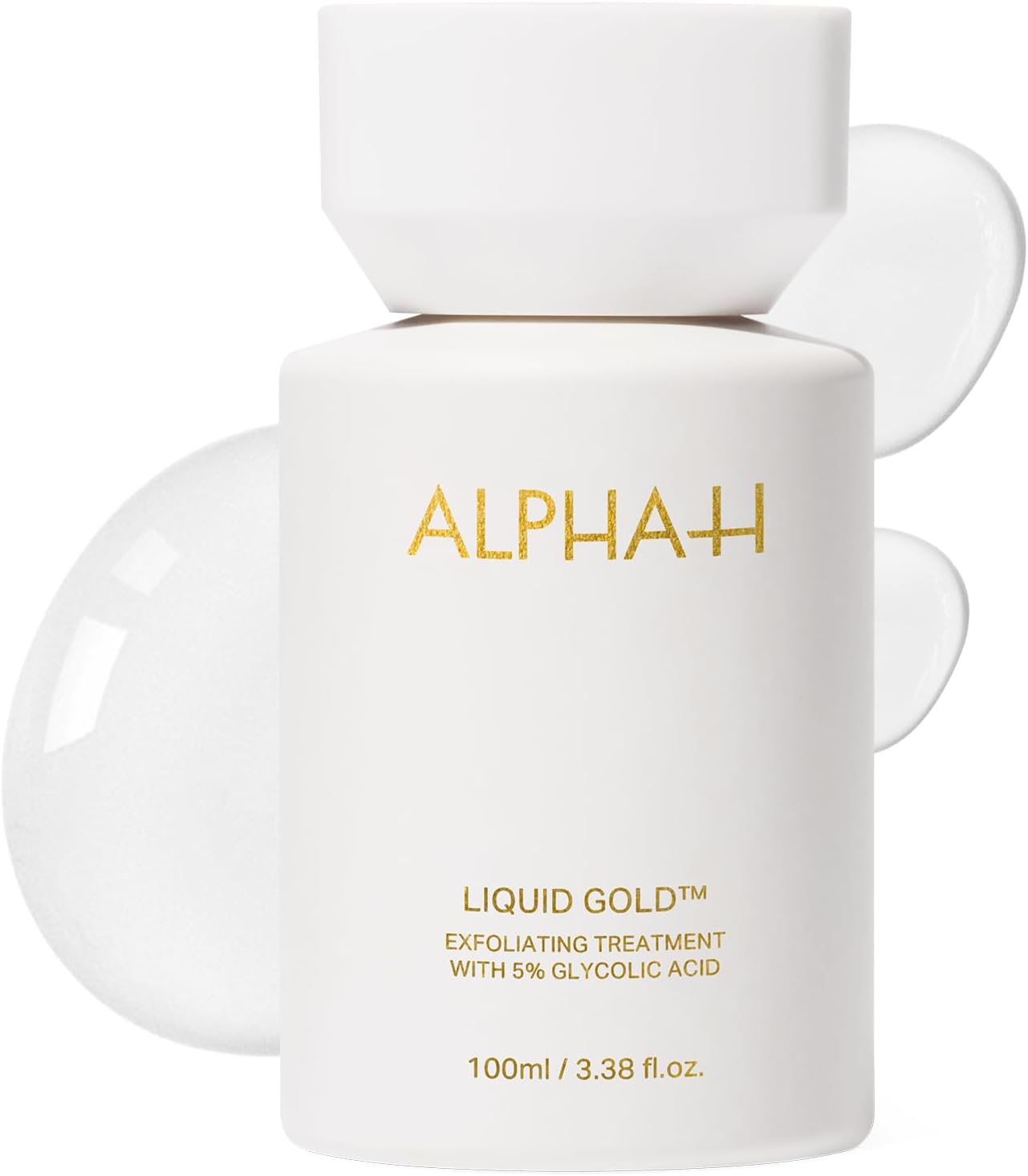
What Alpha-H Liquid Gold actually does
Glycolic acid is the smallest of the alpha hydroxy acids, which is why it is the one that gets talked about. Small molecule, so it moves through the surface easily and loosens the bonds holding dead cells onto the top layer of skin. Those cells leave sooner than they otherwise would. The skin underneath is newer, so it reflects light better — that is the glow, and it is a real physical effect rather than a marketing one.
At 5% this sits in the range that does visible work without needing a professional to apply it. It is aimed at dullness, uneven tone and the rough patches that come from cells hanging around too long. It is not a spot treatment and it is not going to do much about deep lines.
The brand is Australian, and unusually for a trend-driven category it has been making this exact product since well before acids became a mainstream shelf item. That is not a reason to buy it on its own, but it does mean the formula is settled rather than reformulated every eighteen months.
How to use it without wrecking your skin barrier
This is the part that decides whether the $84.95 was worth spending, and it is where most people go wrong.
Leave it on. It is a treatment, not a toner you wipe through. Sweep it over dry skin at night and let it stay. Rinsing it off removes the thing you paid for.
Two nights a week to start. Not every night. Glycolic keeps working for as long as it is on your face, and the damage from over-exfoliating does not announce itself the first week — it turns up as tightness, then stinging at products that never used to sting, then redness that will not settle. By that point the repair takes longer than the results took to arrive.
Never on a retinol night. Both speed up cell turnover. Stacking them does not double the result, it doubles the irritation. Alternate.
Moisturiser afterwards, not instead. Something like the Toleriane Sensitive Riche at $35.99 on top gives the barrier what it needs to get on with the repair. If your routine already runs dry, a hydrating step first — the Cream Skin Cerapeptide Toner at $41.46 does that job — takes some of the edge off without cancelling the acid.
Sunscreen the next morning, without exception. Freshly exfoliated skin burns faster. In Australia that is not a footnote.
Who should not buy it
If your skin is reactive, or you are already on a prescription retinoid, this is not the acid to start with — the sting the label warns about is not a sign it is working, it is a sign it is too much. If you have never used an acid at all, a lower-strength BHA is a gentler place to begin and costs less to find out with.
And if you are not prepared to wear sunscreen daily, do not buy an exfoliant. You will be removing the layer that was doing the protecting and replacing it with nothing.
Is it worth $84.95?
It sits at 4.6 / 5 on Amazon Australia, which for an active this strong is a good number — strong acids usually collect one-star reviews from people who used them nightly and then blamed the bottle.
Worth it if you will actually use it twice a week and stop there. That restraint is the whole product. If you know you will use it every night because it is on the shelf, spend the $84.95 on something that cannot punish you for enthusiasm.